The OT Show: Engaging, Exciting and Inspiring
)
Speakers: Adam Ferry and Keir Harding
Estimated duration: 8–10 minutes
Intro
ADAM:
Welcome to The OT Show interview series, where we speak to members of the occupational therapy community about the ideas, experiences and connections shaping the profession.
Today, we’re joined by Keir Harding, a mental health occupational therapist who has attended The OT Show in several capacities over the years—including as a speaker. We’ll be talking about the atmosphere of the event, its influence on their career and why it remains such an important meeting place for the OT community.
Welcome, and thank you for joining us.
KEIR:
Thank you. It’s lovely to be here.
The attraction of The OT Show
ADAM:
You’ve attended The OT Show in different capacities over the years. What first attracted you to the event, and what keeps bringing you back?
KEIR:
The first time I was invited, I couldn’t attend—and I had a real, palpable sense that I was missing out. I could see on social media that this was a major gathering for occupational therapists. It felt like one of the few places where OTs from across the profession were coming together physically, and there was a real excitement and vibrancy around it.
I’d also been invited to share something I cared deeply about. At that point in my career, I didn’t always feel that what I was saying or doing was particularly valued at work. Being asked to share those ideas publicly—and then receiving such positive feedback—gave me a genuine career boost.
That sense of community, combined with the opportunity to discuss the things that matter to me, is what continues to bring me back.
An atmosphere for the whole profession
ADAM:
How would you describe the atmosphere compared with other professional conferences?
KEIR:
The OT Show feels different because it caters to such a broad range of people. There’s a wide variety of delegates, presentations, activities and exhibitors.
As a mental health occupational therapist, I can sometimes find that general events have less to offer me than they might offer physical health OTs, particularly when exhibitions focus heavily on equipment. But The OT Show still gives me plenty to engage with.
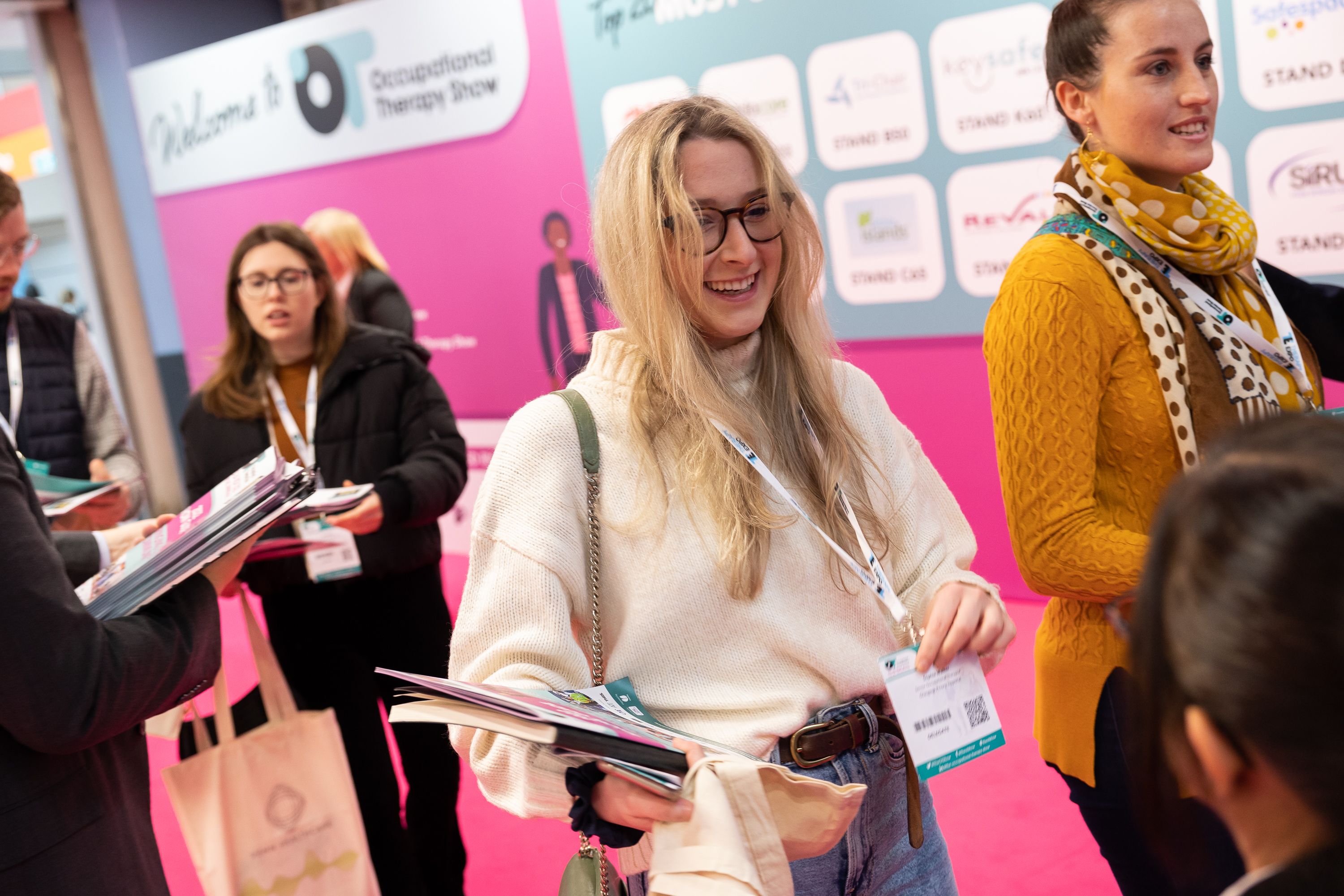
It has real energy. It isn’t quiet—some people might even find it a little overwhelming—but that is also what makes it exciting. People are talking, sharing ideas and showing genuine enthusiasm for what they do. And, of course, you’ll see delegates staggering around under the weight of all the pens, cuddly toys and other things they’ve collected from exhibitors!
I also value the effort to include lived experience in the programme. It isn’t only professionals speaking; people who have received services are contributing too. I’ve tried to ensure that lived experience is represented in my own presentations, and I’m pleased to see it reflected elsewhere at the event.
Building confidence and a professional profile
ADAM:
Has speaking at The OT Show influenced your professional profile or career development?
KEIR:
Immensely.
When I was first invited, I didn’t feel that I had much of value to contribute to occupational therapy as a profession. Simply being sought out and asked for my perspective gave my confidence an enormous boost. It helped me realise that if these issues mattered to me, they might matter to other people too.
On a couple of occasions, there were huge queues for our presentations. Seeing people lining up to hear what we had to say was incredible. Those presentations led to new online connections, invitations to speak elsewhere and opportunities to deliver work in different settings.
More importantly, they showed me that people supported what I was doing. That encouraged me to do more of it.
I don’t think I would be as confident speaking publicly about occupational therapy—or about some of the difficulties facing people working in the NHS—without my experiences at The OT Show.
A place for honest discussion
ADAM:
You’re known for addressing challenging subjects. Has The OT Show given you space to do that?
KEIR:
Yes. I’ve always felt that The OT Show gives me permission to be provocative—in the best sense of the word.
It provides room for controversial, honest and relatively unfiltered opinions. In some professional settings, ideas must be softened or made more palatable. At The OT Show, I’ve felt able to talk openly about what really happens in practice and to challenge the profession.
That freedom has helped me develop and share my work around attachment, trauma and relational practice. It has also prepared me for other major professional opportunities, including delivering the Casson Lecture.
Turning ideas into practice
ADAM:
How important is the event in helping new ideas reach clinicians and influence practice?
KEIR:
It’s an interesting question. People may naturally choose presentations that align with what they already believe, so it can be difficult to know whether you’re completely changing somebody’s mind.
The feedback I receive is often less, “You have changed my practice,” and more, “You’ve made me feel more confident about doing what I already felt was right,” or, “I’m going to be more vocal about something that has been making me uncomfortable.”
That matters. Sometimes people already know what they value, but they need reassurance that somebody else in the profession shares those concerns. Hearing those ideas discussed on a platform like The OT Show can give them permission and confidence to act.
Connections that continue beyond the event
ADAM:
Have any conversations or professional relationships that began at The OT Show gone on to shape your work?
KEIR:
The event creates valuable opportunities for face-to-face conversations with people from organisations such as the Royal College of Occupational Therapists and the Elizabeth Casson Trust.
Once you’ve spoken to somebody in person, they remember you. A future email is no longer coming from a complete stranger, and that can make professional conversations and collaborations much easier.
I’ve also met people at the event who later went on to present their own work. It’s wonderful to see people with similar passions taking those ideas forward and building upon them.
The Show has given me a platform where people can see what I do and decide whether they want to help me do more. Fortunately, many of them have—including people who supported my nomination for the Casson Lecture.
A presentation that remains memorable
ADAM:
Is there a particular presentation or moment from The OT Show that has stayed with you?
KEIR:
One that stands out is a session Holly and I delivered on the activity analysis of self-harm.
Occupational therapists are skilled at analysing activities, but we don’t always confidently apply that thinking to understanding how somebody moves from being relatively all right to taking an action that could seriously harm or kill them.
There are often rational and understandable steps between the initial event and the eventual action. These behaviours can be among the main reasons people remain in hospital, so I believe occupational therapists should be deeply interested in understanding them. Why would we activity-analyse almost anything else but leave this to another profession?
Delivering that session felt genuinely different, and I’m proud that we brought the subject into the conversation.
I’m also inspired by presentations in which somebody stands up and says, “We’re doing something differently because the people we work with told us this was the problem.” My instinct is always: ask people what they need. They will tell you far more than strangers on the internet can.
The response from delegates
ADAM:
What feedback have you received, and has it influenced your subsequent work or teaching?
KEIR:
The feedback has been extremely positive. People particularly value the lived-experience element of our sessions and the fact that the presentations feel real and direct.
I enjoy looking through social media afterwards and seeing people discuss what they heard. That response has encouraged me to keep taking risks.
Before a presentation, I might wonder, “Can I say this?” When it receives a positive response, I know that I can—and perhaps that I can raise other subjects people might find uncomfortable but need to hear.
Advice for first-time visitors
ADAM:
What would you say to someone considering attending for the first time?
KEIR:
Why wouldn’t you go? It’s a free opportunity to access a huge collection of continuing professional development, discover things relevant to your work and meet people from across the profession.
The speakers are accessible too. They don’t finish their presentation, jump into a helicopter and disappear! They are generally around for the day, so you can approach them and speak to people you admire or may previously have known only through the internet.
You’ll probably leave with a bag full of pens, gonks and resources. More importantly, you’ll leave with connections you didn’t have when you arrived.
Some of the people I’ve relied upon professionally are people I might never have met in person without The OT Show.
Three words to describe The OT Show
ADAM:
Finally, if you could sum up The OT Show in three words, what would they be—and why?
KEIR:
Engaging, exciting and inspiring.
It’s engaging because you feel part of something. There are people to meet, conversations to join and plenty happening around you.
It’s exciting because the atmosphere is vibrant and there is always something new to discover. Often, the sessions you attend on impulse—the subjects you know less about—are the ones from which you gain the most.
And it’s inspiring because you leave wanting to do more. You may have projects sitting on the back burner because you’re unsure whether they matter. After spending time among people who share your energy and commitment, those ideas can suddenly feel important again.
Outro
ADAM:
Engaging, exciting and inspiring—a wonderful note on which to finish.
Thank you, for sharing your experiences and for speaking so openly about the importance of confidence, connection and honest professional discussion.