
World Stroke Day: How Accessible Design Can Support Stroke Survivors
This World Stroke Day, we want to recognise the difficulties many stroke survivors continue to face and the role that thoughtful, accessible design can play in supporting their independence at home.
Understanding the challenges of life after stroke
The effects of a stroke vary considerably from person to person. Some survivors experience weakness or paralysis on one side of the body, while others have difficulties with coordination, balance or spatial awareness. Fatigue is also common, making activities that involve prolonged standing or physical effort particularly demanding.
These challenges can increase fall risk and make familiar tasks harder to manage independently. For someone recovering from a stroke, being able to prepare a meal or shower without assistance can represent an important step towards regaining confidence and independence.
Rehabilitation often involves practising these everyday activities and developing strategies to manage any lasting difficulties. Assistive devices can play a valuable role in this process, providing additional support where needed and helping people conserve their energy.
Designing around the needs of stroke survivors
At STEPS Inclusive Design, the experiences of people recovering from stroke and other life-changing conditions have helped shape the development of our Lana Collection.
Working closely with world-leading physiotherapists and occupational therapists, we have drawn on their clinical experience and feedback from people undergoing rehabilitation to understand how everyday equipment can better support independence at home.
For stroke survivors who experience difficulties with balance or fatigue, shower stools and perching stools can offer practical support during daily activities.
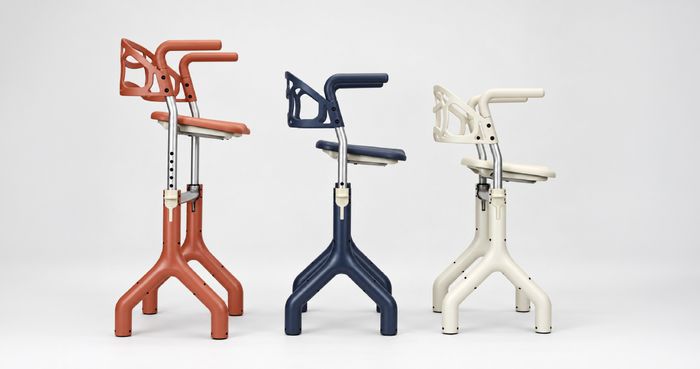
The Lana Shower Stool provides a stable, comfortable place to sit while showering, reducing the need to stand for prolonged periods. For people with reduced mobility or balance, showering can carry an increased risk of falls. The stool’s sculpted seat and integrated handles are designed to provide comfort and additional stability, helping users manage their personal care with greater confidence.
The Lana Perching Stool supports people who find standing for extended periods difficult but want to remain involved in everyday activities, such as preparing food at a kitchen worktop. Its semi-perched position reduces pressure through the hips and knees while allowing users to remain upright, offering an alternative to fully seated support.
Both stools feature adjustable heights and a unique two-point locking mechanism, allowing them to be positioned securely according to individual needs. This flexibility can be useful if more than one person is using the stool and allows individuals with reduced dexterity to alter the height themselves.
The collection has also been designed with the home environment in mind. With furniture-grade design inspired by natural forms and a choice of colours, the stools aim to provide practical support without the institutional appearance often associated with assistive equipment.
Supporting independence beyond rehabilitation
World Stroke Day is an opportunity to recognise the lasting effects of a stroke and the challenges survivors can continue to face long after leaving hospital.
For many, adapting to changes in mobility and everyday activities is an ongoing process. Having access to suitable equipment can help people manage these challenges and maintain their independence at home.