
Sensory Informed OT Training Reduces Challenging Behaviour and Strengthens Recovery in Acute and PICU Services
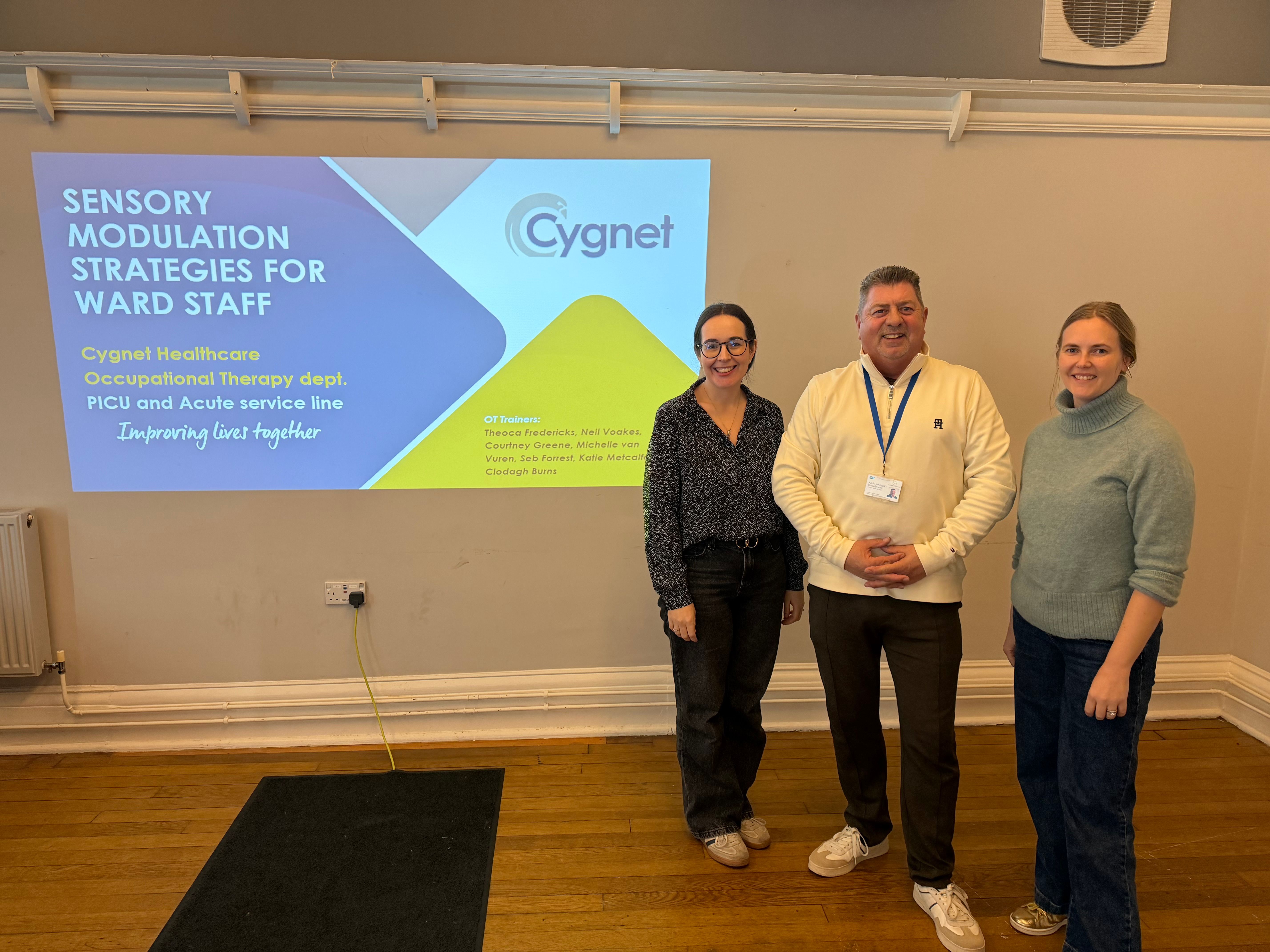
Cygnet Healthcare’s Acute and PICU sensory strategies initiative has reduced challenging behaviour by embedding personalised, sensory‑informed occupational therapy. Collaborative training with Andy Johnston Associates has equipped staff with practical, evidence‑based tools, enhancing emotional regulation, patient autonomy and therapeutic engagement. Experiential learning has transformed practice, shifting teams toward compassionate, recovery‑focused care. Case study by Neil Voakes, Clinical Lead OT, Acute & PICU Services, Cygnet.
Cygnet Healthcare Acute and PICU Occupational Therapy Sensory Strategies Quality Improvement initiative has demonstrated strong outcomes, including a notable reduction in incidents of challenging behaviour across pilot sites. By embedding sensory-informed approaches and personalised interventions, staff have been better equipped to support individuals with sensory processing differences. This has promoted greater patient autonomy and self-efficacy in managing their recovery.
Over the past year, the Cygnet Acute and PICU service line has partnered with Andy Johnston Associates to deliver sensory modulation training to staff within Greater Manchester Mental Health NHS Foundation Trust. These training days have been highly impactful, combining theory with experiential learning. Staff participate in sensory circuits to explore how we all process sensory information, alongside developing an understanding of the eight senses and how these may be affected by mental health conditions and neurodivergence. The sessions include case study discussions, ward-based sensory mapping exercises, and practical strategies to support patients in even the most restrictive of environments, such as seclusion. Interactive sensory stations allow participants to reflect on their own sensory preferences and consider how these influence emotional regulation and mental well-being. This hands-on approach is designed to support staff to translate learning into meaningful, person-centred interventions in clinical practice.
Andy Johnston said:
“This learning set translates sensory theory into real-world PICU practice. It has helped equip PICU teams with practical, evidence-based tools that immediately enhance patient engagement, reduce distress, and fundamentally shift how we understand and respond to patients and support them in their challenges.
These days have been genuinely transformative, moving teams from managing risk to enabling recovery. The programme inspires a more compassionate, person-centred approach, where sensory understanding becomes central to care rather than an optional add-on. Creating a deeper understanding of sensory processing and providing structured, usable frameworks and tools, the programme empowers teams to intervene earlier, more effectively, and with greater therapeutic intent.”
Thanks to Andy Johnston and our trainers Theoca Fredericks, Courtney Greene, Michelle van Vuren, Seb Forrest, Katie Metcalfe and Clodagh Burns for their commitment to equipping NHS colleagues with the skills and understanding to enhance patient care.