
"Roll for Motivation!": Presenting D&D as a Trauma-Informed Therapeutic Intervention at NAPICU, Glasgow 2026
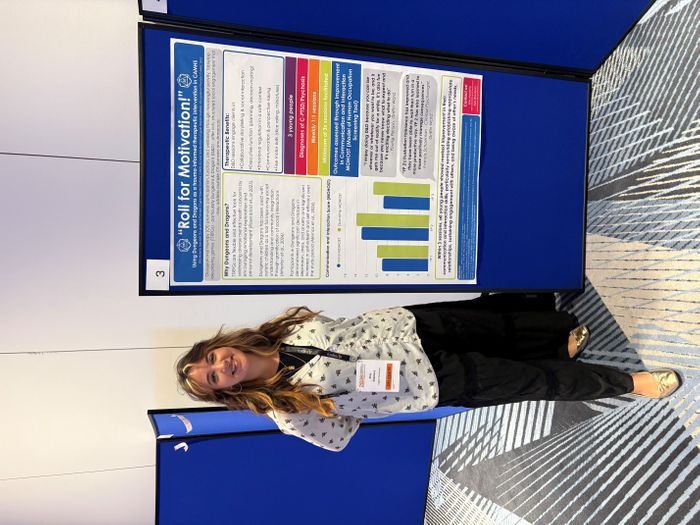
The conference provided a fantastic platform to share how
innovatively occupational therapy promotes participation, function, and wellbeing
through meaningful occupation, in this case, Tabletop Role-Playing Games
(TTRPGs) on our respective CAMHS wards at Cygnet
Hospital Sheffield.
Our work highlights why Dungeons & Dragons is uniquely
suited as a flexible, effective tool for addressing diverse mental health
concerns. As supported by recent literature, TTRPGs encourage emotional
exploration, personal development, and improved social understanding through
the gamification of social interactions.
The poster detailed a pilot project involving 3 young people
with diagnoses of C-PTSD/Psychosis, who participated in weekly 1:1 sessions
(with a minimum of 3 sessions facilitated). Through D&D, these sessions
engaged clients in multiple therapeutic domains:
• Collaborative
storytelling & social interaction
• Executive
function (planning and decision-making)
• Emotional
regulation in a safe context
• Communication
& perspective-taking
• Fine motor
skills via dice rolling and miniatures
Outcomes were assessed using improvements in the
Communication and Interaction section of the MOHOST (Model of Human Occupation
Screening Tool). The data revealed that within just 3 sessions, all young
people showed marked improvements in communication and interaction skills -particularly
in establishing appropriate relationships, sustaining engagement, and being
aware of others' needs.
The qualitative feedback featured on the poster truly
brought the clinical impact to life. One young person shared: "I enjoy
doing D&D because you can be whoever or whatever you want to be, and it
gets me out of reality for a while. It's also fun because you never know what
to expect and it's exciting deciding what to do". Furthermore, a clinical
psychologist noted tangible behavioural progress: "YP 2's frustration
tolerance has improved, and they have been able to wait their turn in a more
productive way. YP 2 has also learned to more positively manage
consequences".